1
2
3
4
5
6
7
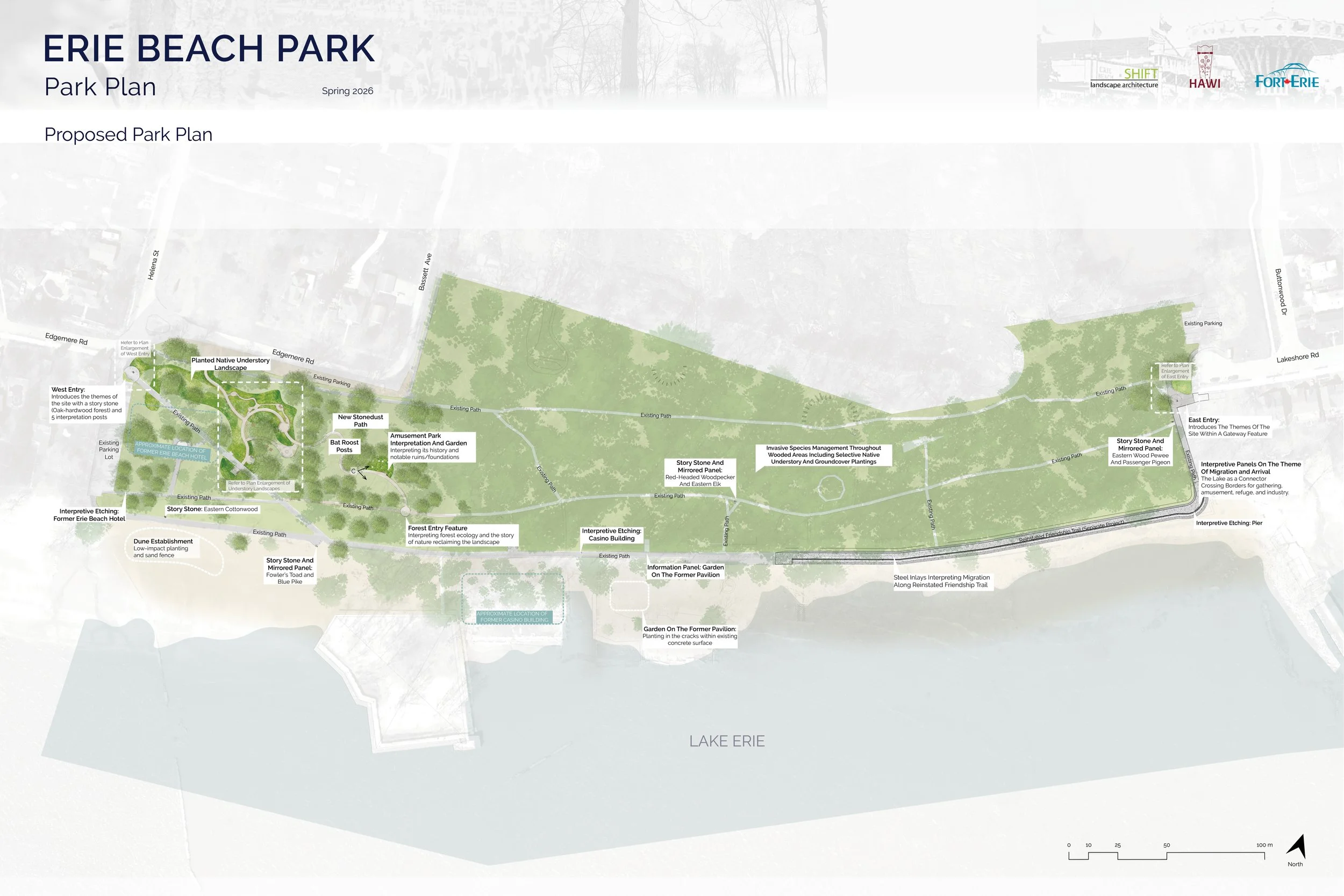
Erie Beach Park is a landscape of traces and echoes. Along the Lake Erie shoreline, layers of Indigenous stewardship, social history, recreation, ecology, and settlement overlap to create a place of uncommon cultural and environmental significance. The site contains evidence of many pasts, some visible, some nearly forgotten, each contributing to the character of the landscape today.
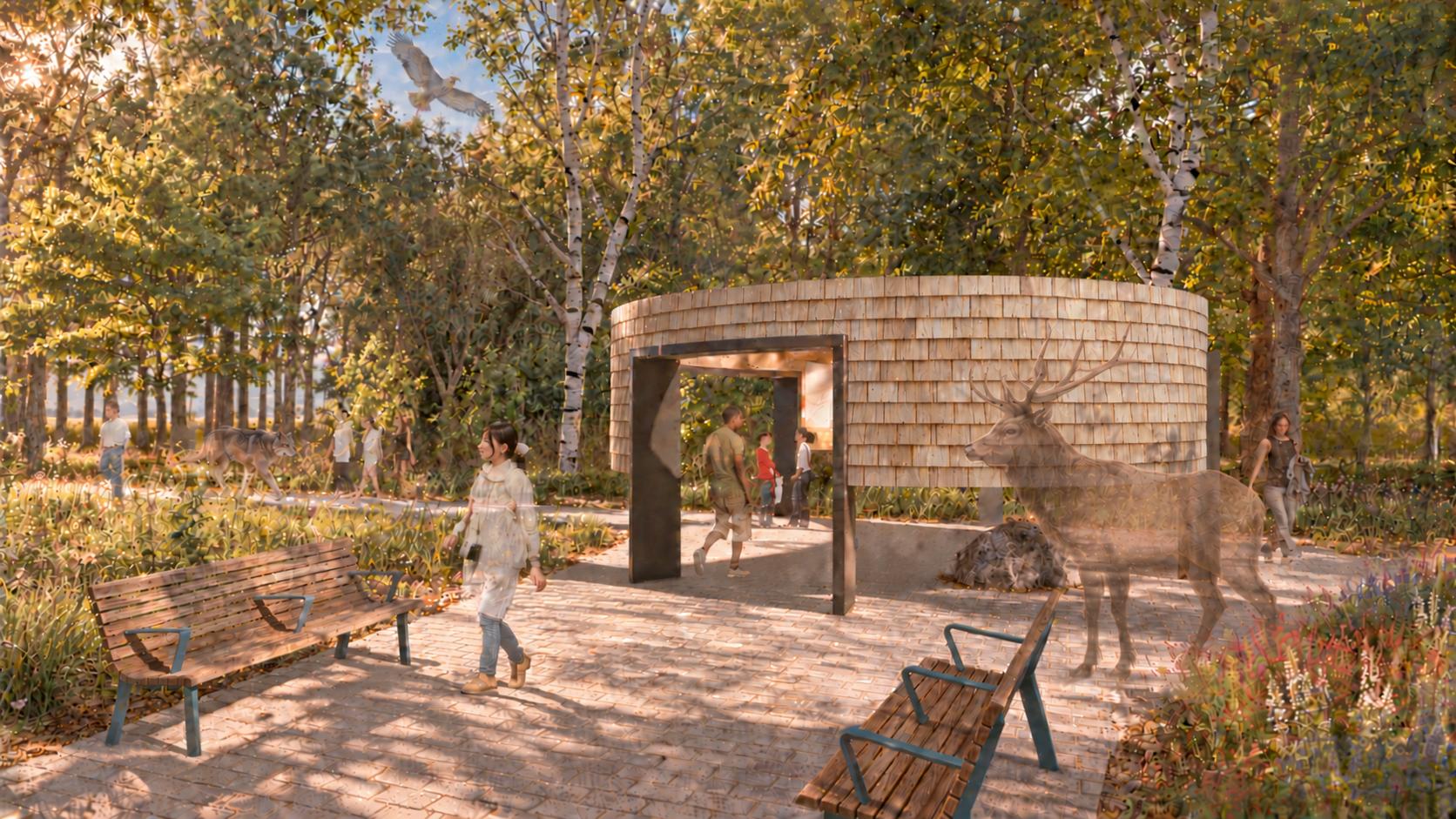
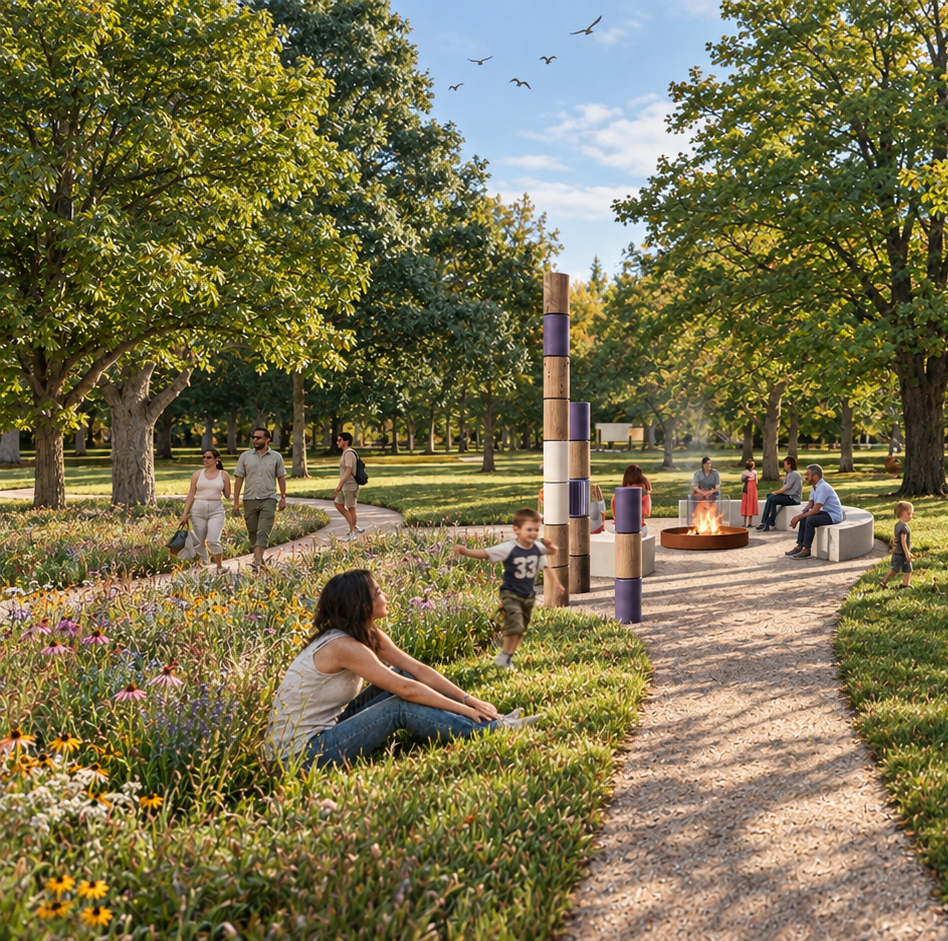
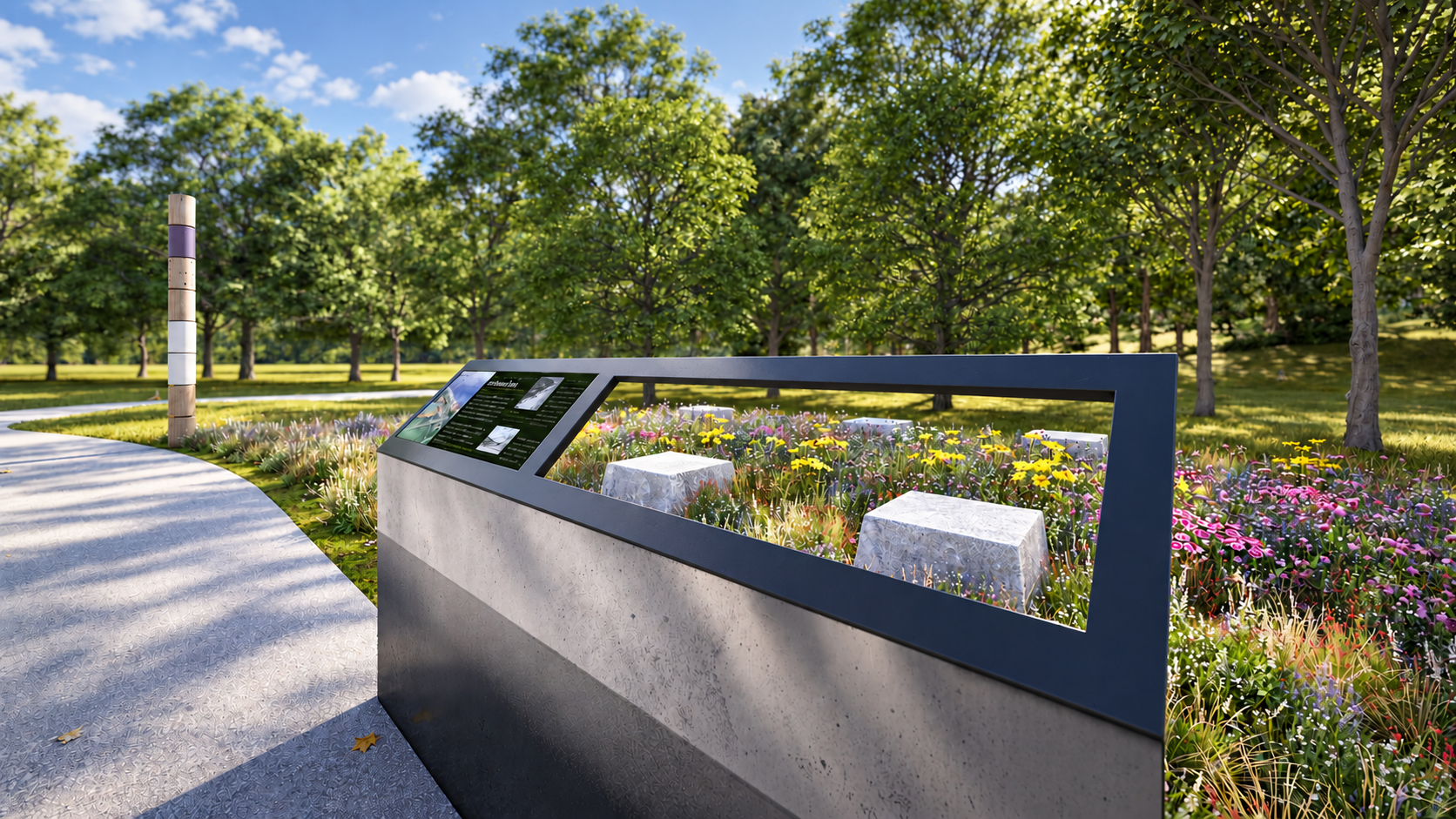
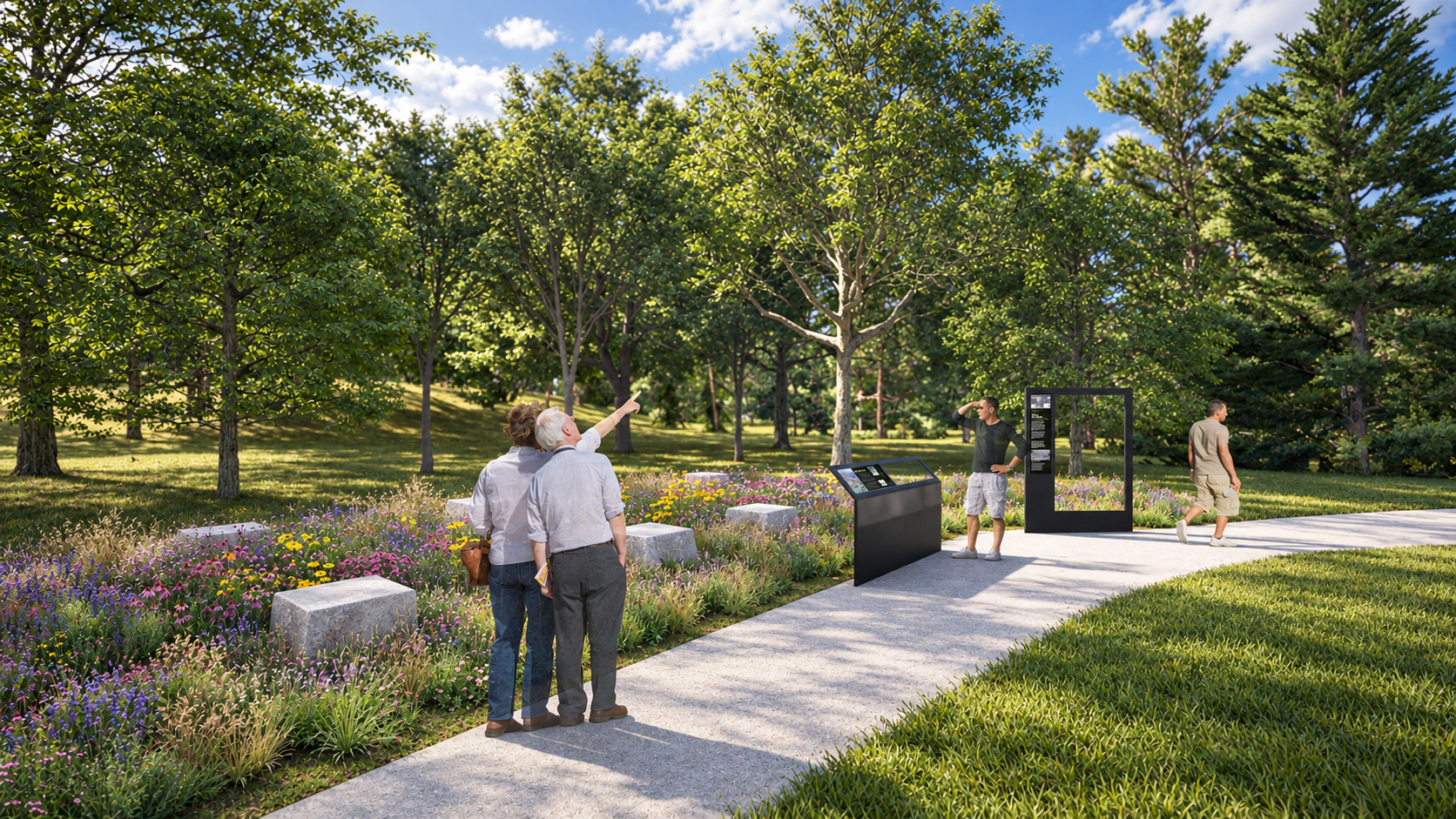
The master plan embraces this complexity. Developed through ongoing collaboration with Indigenous communities, Black historians and cultural knowledge holders, archaeologists, ecologists, and municipal staff, the design seeks to understand and reveal the many histories embedded within the site. These include Indigenous relationships with the land, the legacy of the Erie Beach Hotel and its role as the location of the first meeting of the NAACP, the site's history as a celebrated lakeside destination, and the ecological systems that continue to shape the shoreline today. Through trails, overlooks, gathering spaces, public art opportunities, and interpretive experiences, visitors are invited to encounter these layered narratives through exploration and discovery.
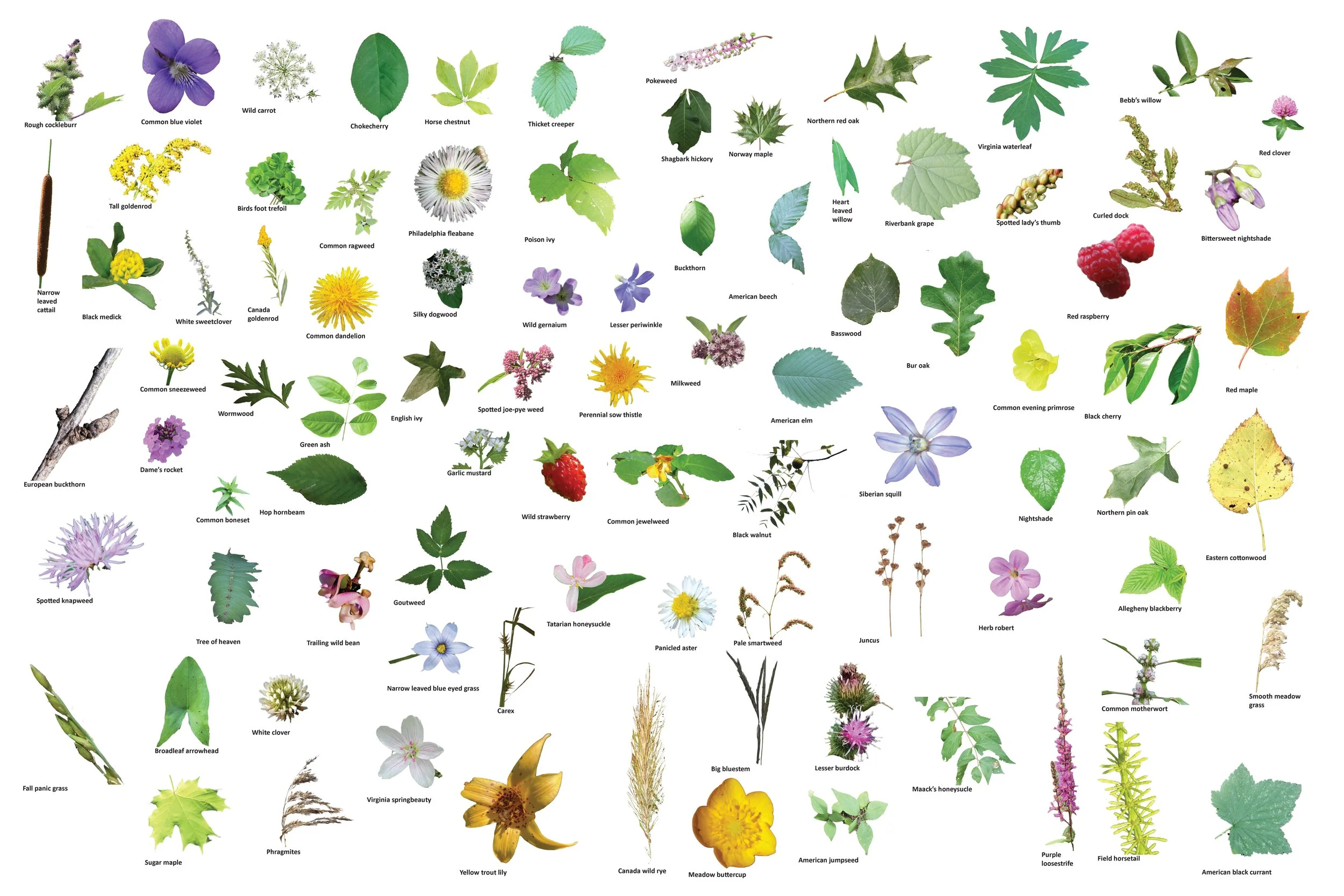
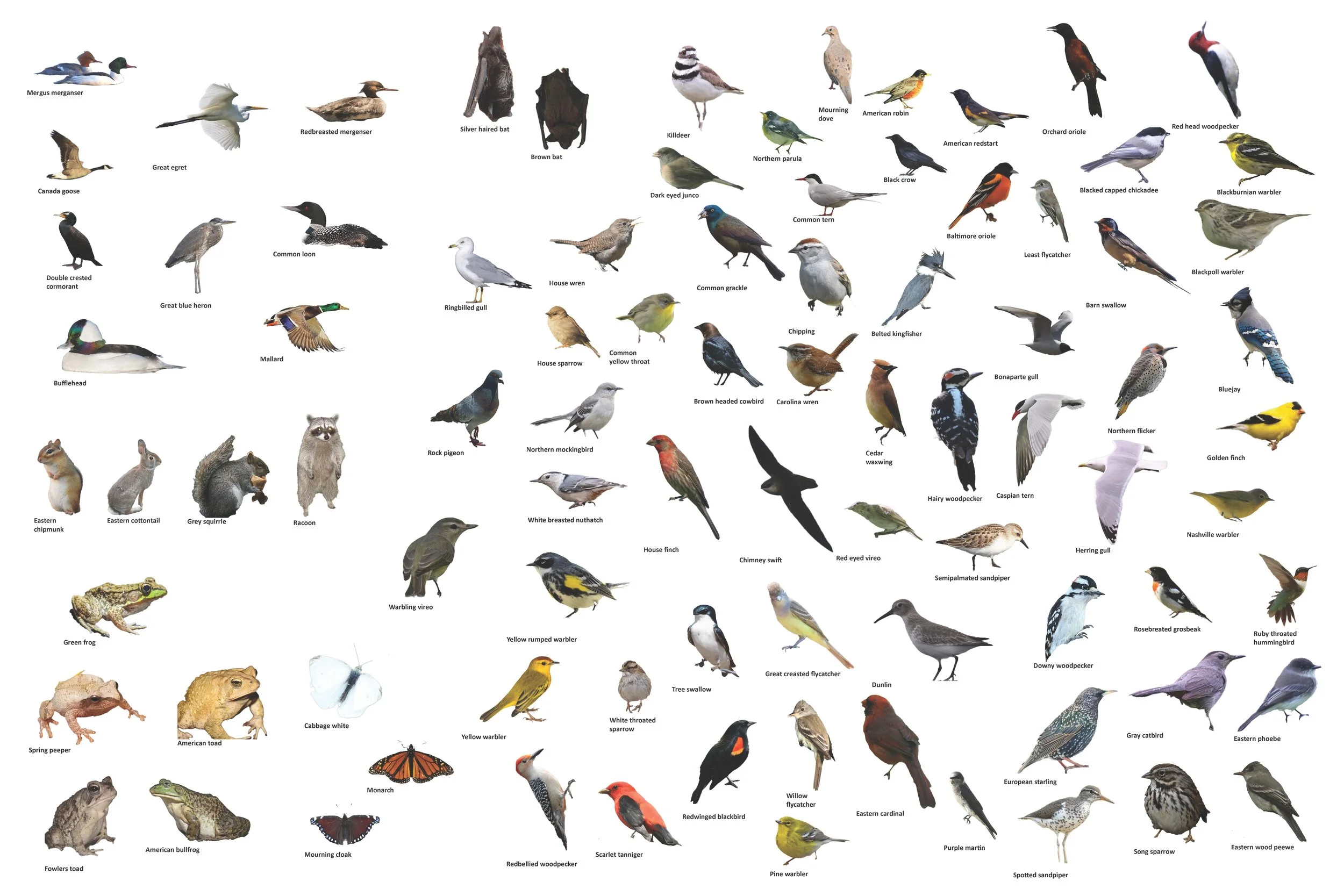
The project is equally grounded in environmental stewardship. Design decisions were informed by the presence of endangered species, including the Red-headed Woodpecker and Fowler's Toad, requiring a careful balance between public access and ecological protection. Public access improvements are carefully integrated into the landscape, while small-scale dune creation along the waterfront supports natural shoreline processes and contributes to the long-term resilience of the beach environment.
The result is a park that reveals rather than imposes. By protecting sensitive ecological systems while bringing forward the site's many cultural histories, Erie Beach Park creates opportunities for recreation, learning, reflection, and connection. It is a landscape where the past remains present, carried forward through the land itself.